How to overcome the challenges of onboarding remote employees
Remote onboarding comes with unique challenges that can affect connection, confidence, and productivity. This article explores the most common remote onboarding hurdles and practical strategies to overcome them.

Remote work is here to stay.
Employees today have far more flexibility than they did before the pandemic, choosing when, where, and how they work.
Among adults whose jobs can be done from home, 75% now work remotely at least some of the time, according to a recent Pew Research Center survey.
At the same time, teams are more geographically dispersed than they were five years ago, collaborating across cities, countries, and even continents.
For many organizations, this means welcoming new employees without ever meeting them in person. While this brings exciting opportunities, it also adds new complexities to onboarding.
We believe onboarding is more than a welcome packet or a quick orientation call. It’s the start of a meaningful learning journey that helps employees feel connected, confident, and capable.
In a remote environment, creating that sense of belonging, clarity, and readiness can be especially challenging.
In this article, we explore the key challenges of onboarding remote employees, why they matter, and what organizations can do to address them.
For a practical, step-by-step guide to onboarding new employees, see our guide to the employee onboarding process.
What is remote onboarding?
Remote onboarding is the process of integrating new employees into your organization when they work entirely or partially outside the office. It involves everything from setting up technology and tools to introducing company culture to guiding employees through role-specific learning.
In a remote setting, the traditional “first-day experience” looks different – there’s no office tour or casual chat over coffee. Instead, the focus shifts to creating structured, digital touchpoints that help new hires feel seen, supported and connected from afar.
An effective remote onboarding process should:
- Clearly communicate company values and culture.
- Provide access to the right digital tools and systems.
- Offer consistent, personalized learning opportunities.
- Foster relationships through communication and collaboration.
- Ensure continuous feedback and support.
What are the challenges of remote onboarding?
Onboarding someone you may never meet in person requires deliberate planning, clear communication, and digital support.

Some of the most common hurdles include:
Helping your new hires feel connected
One of the most immediate challenges of remote onboarding is helping new employees feel like they truly belong to the team, the organization, and the work they are contributing to.
Employees who feel connected and valued are happier, healthier, and more productive.
In an office, connection often happens naturally: casual chats by the coffee machine, hallway conversations, or observing team dynamics. Remotely, these everyday interactions vanish.
Without these touchpoints, new hires can feel isolated or unsure who to reach out to for guidance. They miss the subtle social cues that explain team norms, communication styles, and unwritten rules.
Even experienced employees can struggle to build confidence and engagement without the informal support that makes an office environment feel familiar.
How to address:
- Assign a dedicated onboarding buddy or mentor to guide new hires.
- Schedule structured virtual introductions with key team members.
- Create opportunities for informal social interactions, like virtual coffee chats or team games.

Onboarding checklist in PDF and Excel formats
Ensure a smooth and effective onboarding process for your new hires and set them up for success.
DownloadAvoiding overwhelm with too much information
Remote onboarding can often overwhelm new hires with an abundance of digital materials: company policies, compliance modules, software guides, and training programs.
Without in-person support, employees may struggle to figure out what to focus on first or where to find key information.
Too many documents, scattered links, or unclear priorities can lead to confusion, mistakes, or missed steps.
Remote employees may feel lost, anxious, or hesitant to ask questions, slowing their ability to integrate effectively.
How to address:
- Organize content into a clear, step-by-step onboarding roadmap.
- Prioritize essential materials first and make supplementary resources optional.
- Use your LMS to organize and deliver your learning resources, making it easy for employees to find and access the content they need.
- Include short “orientation check-ins” to help new hires focus on critical information.
Keeping new hires engaged and motivated
Video calls, slide decks, and pre-recorded modules rarely replicate the energy of in-person sessions. Without live interactions, new hires may feel like passive observers rather than active participants in their learning journey.
The risk is that employees may fail to internalize important knowledge or lose motivation to engage fully with onboarding content.
Remote employees can quickly feel disconnected from the company mission, their team, or the purpose behind their work if engagement isn’t fostered.
How to address:
- Incorporate interactive elements like quizzes, polls, and breakout discussions.
- Use gamification features in your LMS, such as badges, leaderboards, or progress tracking, to make learning more engaging and rewarding.
- Schedule live sessions with opportunities for questions and collaboration
- Blend asynchronous content with synchronous touchpoints to balance flexibility and engagement.
- Encourage managers to check in regularly with personalized feedback.
Making roles and expectations crystal clear
In a virtual environment, understanding how you’re doing can be much harder than in an office.
Managers cannot easily observe hesitation, confusion, or uncertainty during a task, and employees may be reluctant to ask questions or seek clarification over digital channels.
This creates a challenge around confidence and role clarity. Without clear feedback and visibility into progress, new hires may struggle to prioritize tasks, understand performance standards, or feel prepared to contribute effectively.
The sense of “am I doing this right?” can linger, affecting morale and productivity.
How to address:
- Set clear, measurable goals for the first 30, 60, and 90 days.
- Use shared dashboards or project management tools to track progress.
- Schedule regular one-on-one check-ins with managers to provide feedback and answer questions.
- Encourage a culture where asking for clarification is normalized and welcomed.
Creating a consistent onboarding experience everywhere
Remote onboarding often involves multiple teams, managers, or geographic locations.
Differences in approaches, guidance, and resources can create inconsistent experiences, leaving some employees feeling less supported or unclear about expectations.
Inconsistent onboarding can cause confusion over workflows, processes, and even organizational culture. Employees may develop gaps in knowledge or have different interpretations of company norms depending on their team or location.
Maintaining consistency is inherently more challenging when onboarding is distributed across time zones and departments.
How to address:
- Standardize core onboarding processes and materials across the organization.
- Provide managers with training and checklists to ensure consistency.
- Use a centralized platform to share company-wide policies, culture content, and role-specific guidance.
- Collect feedback from your new hires to identify gaps and ensure alignment.
Onboarding checklist in PDF and Excel formats
Ensure a smooth and effective onboarding process for your new hires and set them up for success.
DownloadTackling tech challenges before they slow you down
Technology is the backbone of remote onboarding, but it can also be a major barrier.
Missing accounts, platform unfamiliarity, or unreliable internet connections can frustrate new hires and slow the onboarding process.
Even minor technical difficulties can feel magnified in a remote setting. New employees may spend excessive time troubleshooting instead of learning, which can impact confidence and engagement.
How to address:
- Ensure all necessary accounts, tools, and software are ready before day one.
- Provide clear guides, tutorials, and troubleshooting resources.
- Offer IT support that is easily accessible and responsive.
- Test digital platforms in advance to reduce friction and interruptions.
Keeping support going after initial onboarding
Remote onboarding doesn’t end after the first week, yet sustaining support is more difficult without physical presence.
Employees may struggle to find guidance, access resources, or get timely feedback once formal onboarding sessions are complete.
This challenge can lead to a sense of being “left to figure it out alone,” which affects confidence, motivation, and integration into the team.
How to address:
- Extend structured check-ins beyond the first month.
- Maintain a mentorship or buddy program for at least the first 90 days.
- Encourage team leaders to provide continuous guidance and feedback.
- Leverage your LMS to track ongoing development.
How Valamis helps you onboard remote employees
Onboarding remote employees comes with unique challenges.
At Valamis, we do more than provide a platform; we become a partner in helping your new hires feel confident, connected, and ready to succeed.
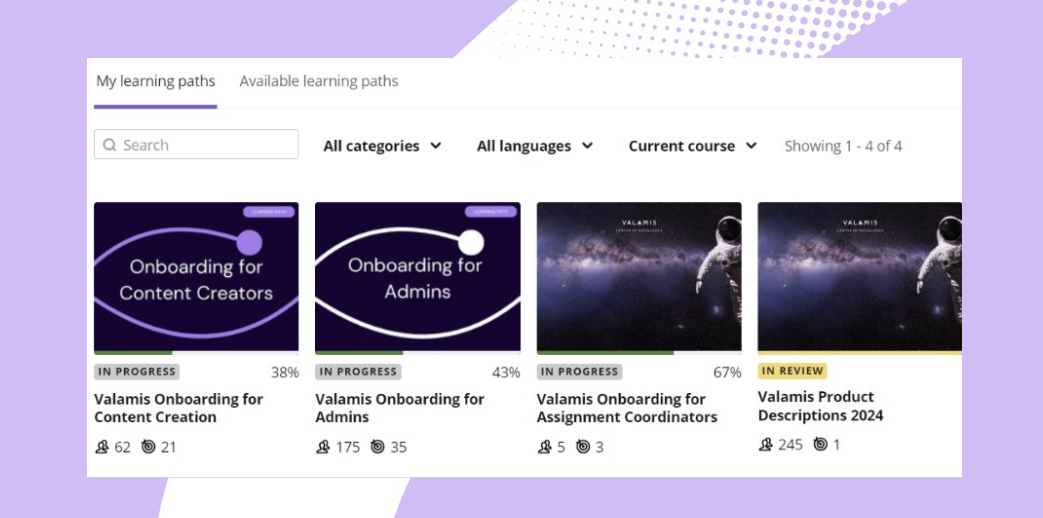
We work with organizations to make onboarding smoother, more engaging, and truly meaningful. Here’s how we support you:
- Automate and simplify onboarding: We help you enroll new hires into tailored learning paths, send reminders, and track progress automatically. This takes the administrative burden off your team so nothing falls through the cracks.
- Personalize learning experiences: Every role, region, and experience level is different. We help you create learning journeys that combine videos, quizzes, interactive content, and mentor tasks to ensure employees absorb what matters most.
- Provide learning anytime, anywhere: Remote teams need flexibility. With 24/7 access to training, every new hire can learn at their own pace, stay aligned with your company goals, and feel supported no matter their time zone.
- Seamlessly integrate with your systems: We connect to HRIS and people platforms to sync data, enroll employees automatically, and report completions.
- Gain real-time insights: Track progress, spot skills gaps, and provide timely guidance, all from one centralized platform.
More than just a learning solution, we aim to become an extension of your L&D team, helping you create an onboarding experience that’s consistent, engaging, and aligned with your company culture. Explore our platform.
By centralizing resources, structuring learning, and providing clear visibility into progress, we help your organization set every new hire up for success from day one and beyond.
Book a demo today and discover how we can help your team create a seamless, engaging onboarding experience for every employee.
Final thoughts
As organizations refine their remote onboarding strategies, the focus shifts from simply completing tasks to cultivating a meaningful employee experience.
By combining thoughtful human support with structured digital tools, companies can create an environment where new remote hires feel empowered to contribute, ask questions, and build relationships from day one.
When onboarding is intentional and well-supported, it sets the tone for how employees engage with their teams and the broader organization.
This foundation not only accelerates productivity but also strengthens trust, collaboration, and long-term commitment – key ingredients for thriving in a distributed workplace.
Onboarding checklist in PDF and Excel formats
Ensure a smooth and effective onboarding process for your new hires and set them up for success.
Download