Best LMS for manufacturing companies in 2026
Compare the best LMS for manufacturing in 2026. What a manufacturing LMS needs for compliance, certification tracking, and multi-site, non-desk workforce training.

Manufacturing L&D teams carry a specific kind of pressure that most software lists don’t acknowledge. Miss a certification deadline and you’re not just behind on training, you’re exposed to regulatory risk. Roll out a new procedure to five sites and have it land inconsistently, and you have a safety problem, not an admin problem.
A generic LMS can handle courses. The best LMS for manufacturing handles the reality that training here has legal weight, operational consequence, and an audience that works shifts, not desk hours.
This guide covers what separates an LMS for manufacturing environments from a general-purpose one, how to evaluate your options, and a breakdown of the platforms most worth considering in 2026.
Quick comparison: best LMS platforms for manufacturing
| Platform | Best for | Compliance focus | Starting price |
|---|---|---|---|
| Valamis | Mid-large enterprise, compliance + analytics | Manufacturing, healthcare, professional services | Quote-based* |
| 360Learning | Collaborative, peer-driven content creation | General compliance, decentralized orgs | $8/user/mo |
| Absorb LMS | Enterprise, AI-driven administration | Multi-industry, content library | Custom |
| Cornerstone OnDemand | Large enterprise, full talent suite | Enterprise compliance, large content library | Custom |
| Litmos | Regulated industries, large enterprise | Regulated industries, SAP SuccessFactors integration | Custom |
| TalentLMS | SMB to mid-market, fast setup | General compliance, any industry | From $119/mo |
| CYPHER Learning | AI-personalized, SMB to mid-market | Engagement-first compliance workflows | Custom |
* Valamis pricing is quote-based. TalentLMS price shown is its lowest tier (Core, 1–40 users, billed yearly); it scales up by user band. 360Learning and TalentLMS pricing current as of July 2026.
Why does manufacturing training need a different kind of LMS?
Most LMS platforms are built for office-based workforces. The assumption is that learners have a laptop, a quiet moment, and a stable internet connection. Manufacturing environments break all three assumptions.
Mobile and offline access
Floor workers are not going to complete safety training on a desktop computer in a break room. The best platforms deliver training on mobile devices and cache content for offline use, so a worker in a facility with patchy connectivity isn’t excluded from the program.
Multi-site management
Manufacturing organizations rarely operate from a single location. Your LMS needs to handle different training requirements across sites, different regulations, different languages, different role structures, without requiring a separate platform for each.
Role-based learning paths
An operator, a supervisor, and an engineer have completely different training needs. A good manufacturing LMS maps content to job roles automatically, so each person gets what’s relevant to them without an administrator manually building every assignment.
Analytics and reporting L&D teams can use
Completion rates are a start. What L&D leaders in manufacturing need is visibility into certification status across the workforce, early warning on upcoming expiry dates, and data they can take into an audit or a board meeting.
The 2026 Fosway AI Market Assessment for Learning Systems found that while nearly every vendor now claims AI-enhanced analytics, 24% of the AI features vendors map have actually been delivered and are live with customers. That gap is worth using in the evaluation: ask any shortlisted platform to show you the analytics feature working, not just describe it, especially in compliance-heavy environments.
How do you choose an LMS for a manufacturing environment?
Beyond the feature checklist, there are a few harder questions worth asking before you commit.
Will it work for your non-desk workforce?
Ask vendors to show you specifically how their platform handles mobile and offline access. Request a demo that starts on a phone, not a laptop. If they can’t show you that easily, that’s a signal worth paying attention to.
How does it handle regulatory updates?
Compliance requirements change. When OSHA updates a standard or your ISO certification shifts, how quickly can you update and reassign the relevant training? Some platforms make this simple. Others require administrator effort every time something changes.
What does implementation look like?
A platform that takes nine months to deploy is not a solution for a manufacturing company that needs training running by a specific compliance deadline. Ask for realistic implementation timelines, not best-case ones, and ask what support is included.
How does it integrate with your existing systems?
If you’re running SAP, Oracle, or another ERP, your LMS needs to connect cleanly with it. HR data should flow into the LMS automatically so that when someone changes role or site, their training assignments update without manual intervention.
Can it scale across languages and locations?
If you operate across multiple countries, or plan to, multilingual support and multi-portal management aren’t optional. Check whether the platform genuinely handles this or just offers basic translation.

Checklist on how to choose the best LMS
The checklist will keep your focus on what really matters when choosing an LMS.
DownloadThe best LMS platforms for manufacturing in 2026
These are the platforms that consistently appear in evaluations for manufacturing organizations, each with a different set of strengths. (For a broader look beyond manufacturing, see our guide to the best employee training software.)
1. Valamis
Best for: Mid-large enterprise, compliance, skills management, and proving learning impact

Valamis is an enterprise LMS built for organizations where compliance, certification management, and skills development need to work together. It handles multi-site, multi-language deployments and is built for the kind of reporting L&D teams need when audits are part of the job.
The 2026 Fosway AI Market Assessment for Learning Systems places Valamis above market average across all five functional areas and in the top third of vendors analyzed for live AI delivery. Its manufacturing-specific capabilities include role-based learning paths, certification tracking, and analytics built for proving training impact to the business.
Fastems, a leading CNC automation manufacturer, uses Valamis to manage compliance and partner training across its operations, and VCST and BMT Alutech use it to unify training across global manufacturing plants.
Key features: Combined LMS + LXP + LRS, xAPI and SCORM support, compliance and certification tracking, role-based learning paths, skills management, AI content generation and translation, learning analytics, Copilot Connector for Microsoft 365
Integrations: SAP SuccessFactors (fully integrated, two-way sync), Workday, Salesforce, BambooHR, Azure AD, SCIM and API, Microsoft 365, Google Drive
2. 360Learning
Best for: Organizations building compliance training collaboratively

360Learning is strong on collaborative learning and AI-powered content authoring. Works well for manufacturing organizations that want to build training internally using subject matter experts on the floor. Better suited to organizations where content creation is decentralized than those with heavy compliance requirements.
Key features: Peer authoring, AI course generation, discussion-based learning, skills mapping, certification tracking, completion automation, manager dashboards
Integrations: Salesforce, BambooHR, Workday, Teams, Slack, Greenhouse
3. Absorb LMS
Best for: Enterprise, AI-driven compliance administration

Absorb LMS is known for its automation capabilities and clean reporting. Handles role-based paths and gamification well. A solid option for growing manufacturing organizations that need something that scales without a large admin team.
Key features: AI-driven enrollment automation, Amplify content library, certification management, role-based paths, gamification, mobile app
Integrations: ADP, Workday, Salesforce, SCIM, HRIS via API
4. Cornerstone OnDemand
Best for: Large enterprise wanting a full talent suite alongside training
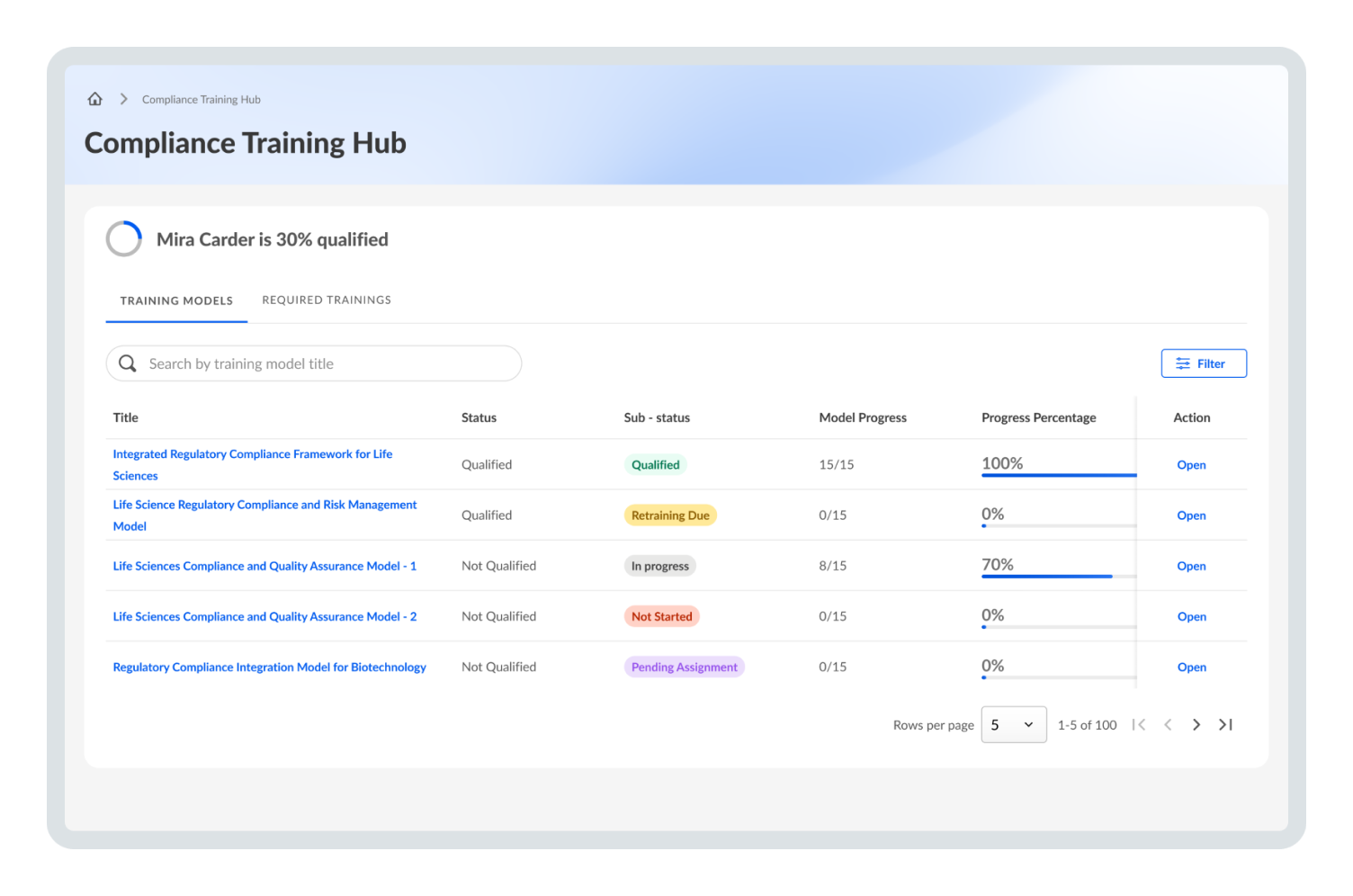
Cornerstone OnDemand is a fixture in enterprise manufacturing evaluations, with deep compliance functionality and one of the largest content libraries on the market. It’s a full talent management suite rather than a dedicated learning platform, which brings implementation weight and cost that can be more than mid-sized manufacturers need. Already on Cornerstone and reassessing? See our Cornerstone vs Valamis comparison.
Key features: Compliance training, certification management, Content Anytime subscriptions, skills graph, extended enterprise
Integrations: SAP SuccessFactors, Workday, ADP, Teams, SSO providers
5. Litmos
Best for: Regulated industries needing broad compliance automation

Litmos operated as SAP Litmos until Francisco Partners completed its acquisition of the business from SAP in December 2022; it has run as an independent company since.
It still integrates with SAP SuccessFactors, so organizations running SAP HR infrastructure can connect the two, but SAP ownership is no longer its story. Litmos is best known now for compliance automation and reporting depth, and remains a solid fit for large, regulated enterprises regardless of their underlying HR stack.
Key features: Compliance automation, certification tracking, audit trails, multi-language support, content library
Integrations: SAP SuccessFactors, Salesforce, Workday, Teams, Zoom, SSO providers
6. TalentLMS
Best for: Small to mid-sized manufacturing companies

TalentLMS is a mobile-first option that works well for small to mid-sized manufacturing companies. Easier to implement than enterprise platforms but has less depth on compliance management and multi-site administration at scale.
Key features: Built-in authoring, certification management, gamification, TalentLibrary content marketplace, mobile app, automated reminders, SSO
Integrations: BambooHR, Zoom, Salesforce, Slack, Teams, Zapier
7. CYPHER Learning
Best for: AI-automated compliance workflows, SMB to mid-market

CYPHER Learning has invested in AI-powered personalization and mobile access. Appears frequently in manufacturing LMS evaluations. Best for organizations prioritizing learning engagement features alongside compliance.
Key features: CYPHER Copilot AI, course generation from documents, automated role-based assignment, certification management, gamification, completion reporting
Integrations: Teams, Zoom, Google Workspace, HRIS via API
How does Valamis stack up on AI?
See the independent findings in the 2026 Fosway AI Market Assessment for Learning Systems.
Download the full reportWhat does good manufacturing training look like in practice?
The platforms above are tools. What separates manufacturing organizations that get results from those that don’t is usually how they use them.
Onboarding that starts before day one
The best manufacturing onboarding programs use an LMS to deliver safety and compliance training before a new hire steps onto the floor. This means day one is less about paperwork and more about putting prior learning into practice. For a detailed breakdown of how to structure this, see our guide to onboarding manufacturing employees with an LMS.
Certification management that runs on autopilot
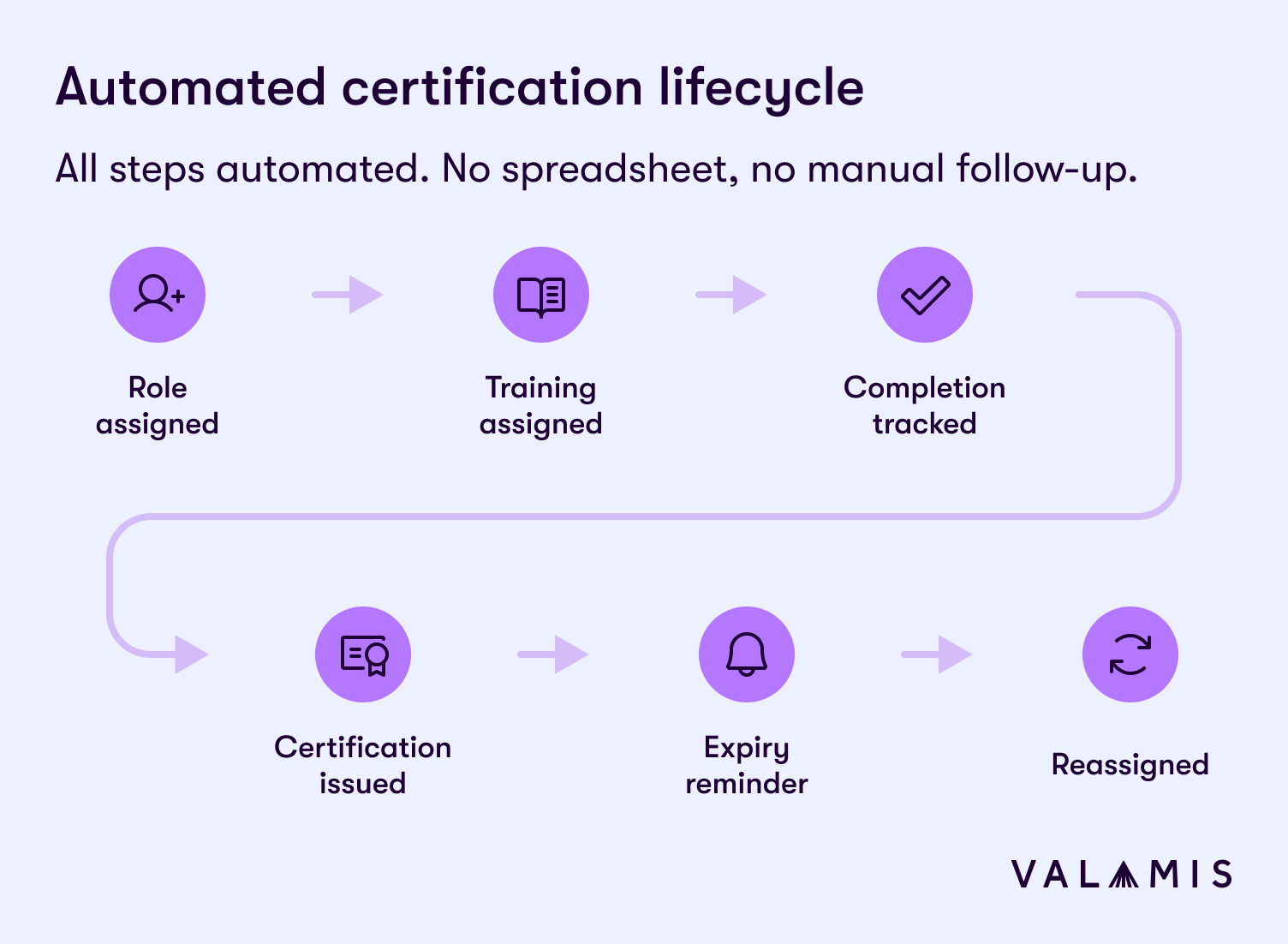
Manual tracking of certification expiry is a risk. When a worker’s forklift license or confined space certification is about to lapse, the system should be sending reminders and reassigning training, not waiting for an L&D administrator to catch it in a spreadsheet.
Training that proves its value
In manufacturing, L&D teams are regularly asked to justify training spend against operational outcomes. A properly set up LMS gives you the data to do this: connecting training completion with safety incident rates, audit outcomes, and workforce readiness metrics.
Frequently asked questions
What is the best LMS for manufacturing compliance training?
The best LMS for manufacturing compliance training automates certification assignment, tracks expiry dates, and produces audit-ready reports without manual effort. Valamis, Litmos, and Absorb LMS are commonly evaluated for this use case; see our full guide to the best compliance training software for a wider comparison.
Can an LMS work for factory floor workers without desk access?
Yes, but only if the platform genuinely supports mobile and offline access. Not all platforms handle this equally. Ask any vendor to demonstrate mobile access during the evaluation process.
How does an LMS help with safety certification tracking?
A manufacturing LMS assigns safety training by role, tracks completion and certification status, sends automated reminders before expiry, and generates reports for audits. This removes the reliance on spreadsheets and manual follow-up.
What’s the difference between an LMS and a TMS for manufacturing?
A Learning Management System (LMS) manages the delivery and tracking of training content. A Training Management System (TMS) typically handles logistics: scheduling, instructor management, classroom booking. Some platforms combine both. Most manufacturing organizations start with an LMS and add TMS functionality if needed.
How long does it take to implement an LMS in a manufacturing company?
Implementation timelines vary. Simpler platforms for smaller organizations can be up and running in weeks. Enterprise deployments with complex integrations, multi-site configurations, and content migration typically take three to six months. Be direct with vendors about your deadline requirements.
Valamis is an enterprise LMS used by manufacturing organizations across Europe and beyond. If you want to see how it handles compliance tracking, multi-site management, and manufacturing-specific training, book a demo.